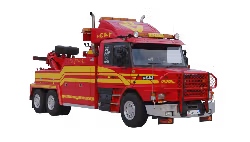
How to Prepare Your Car for Flatbed Transport
How to Prepare Your Car for Flatbed Transport
Transporting a car on a flatbed truck is the safest and most common method of vehicle transport in Poland — whether after a breakdown, accident, or when buying a car from another city or country. A few minutes of preparation before loading saves time, prevents damage, and avoids extra costs.
Our drivers load 5–10 cars a day. Here's what they wish every customer would do before the flatbed arrives.
1. Document the Vehicle's Condition
Before the flatbed shows up, grab your phone and take photos of everything. This protects you against disputes about damage that may have happened during transport. We've never had a claim against us, but we always tell customers: take the photos anyway.
What to do:
- Take photos from every angle (front, rear, both sides, roof)
- Photograph existing scratches, dents, and paint chips up close
- Capture wheels and tires — any visible damage
- Photograph the interior — dashboard, seats, trunk
- Note the odometer reading
- Keep photos with timestamps
This simple step takes 5–10 minutes but can save you serious hassle. If the transport company offers a condition report, sign it and keep a copy.
2. Remove Personal Belongings
Before loading onto the flatbed, take out all personal and valuable items. Transport companies aren't responsible for items left inside.
Items to remove:
- Vehicle documents (registration, insurance)
- Electronics (GPS, dashcam, chargers)
- Valuables (sunglasses, wallet, bags)
- Loose items from the trunk (tools, cans, bottles)
- Air fresheners and accessories hanging from the mirror
- Child seats (unless permanently mounted)
Loose items shift during transit and can scratch the interior. Heavy items in the trunk can also interfere with securing the car on the platform.
3. Secure External Loose Parts
If your car has loose external components, secure or remove them:
- Antenna — fold or unscrew mast antennas
- Spoilers and trim — if loose, secure with tape
- Folding mirrors — fold to parking position
- Floor mats — remove rubber mats (they can shift)
- Engine cover — verify it's properly attached
For vehicles after a collision where body parts may be loose (bumper, hood), tell the flatbed driver — they can secure these with additional straps.
4. Disable the Alarm and Security Systems
Nothing is more annoying than a car alarm screaming at 6 AM while we're loading it in a residential area. Before the flatbed arrives:
- Disable the factory alarm — usually unlocking with the remote is enough
- Deactivate aftermarket alarms — may need a separate remote or disconnection
- Turn off parking sensors and cameras that may activate
- Deactivate steering lock — leave the key in ACC position or hand it to the driver
- Release the parking brake — makes it easier to roll onto the platform (unless the driver says otherwise)
Note: For modern keyless cars, make sure the key fob is within range during loading to prevent steering lock.
5. Fuel Level — How Much to Leave?
The sweet spot is about 1/4 tank:
- Too much fuel = extra vehicle weight, increasing transport costs
- Too little = you won't be able to drive away from the delivery point
- Empty tank = makes it hard to verify the car starts properly after transport
If the vehicle is broken down and doesn't run, fuel level doesn't matter — just let the transport company know.
6. Check Tire Pressure
Proper tire pressure makes loading and unloading safer and smoother. Low-pressure tires can:
- Make it difficult to roll the vehicle onto the platform
- Cause uneven load distribution during transport
- Lead to tire damage on the flatbed ramps
If you have access to a compressor, inflate tires to the recommended pressure. If a tire is flat — no problem, the driver can handle loading.
7. Keys and Documents
Have these ready before the flatbed arrives:
- Complete set of keys — main and spare (if available)
- Registration document
- Insurance policy — mandatory on public roads
- Breakdown documentation — police report if applicable
- Owner's manual — especially for rare models with specific towing procedures
8. Communication with the Driver
Good communication with the flatbed driver avoids misunderstandings and speeds things up.
Tell the driver about:
- Type of fault (do wheels turn, does steering work)
- Whether the car is in gear/park/neutral
- Unusual features (lowered suspension, wide body kit, tow bar)
- Exact pickup and delivery addresses
- Access limitations (narrow street, gate, underground parking)
If the vehicle is in a hard-to-reach spot, mention this when you book — special equipment may be needed. Last month we got called to an underground garage in Wrocław with a 1.8m ceiling clearance; the standard flatbed doesn't fit in there, so we brought a wheel-lift unit instead.
9. Special Requirements for Luxury and Classic Cars
Transporting luxury, sports, and classic cars takes extra care:
- Use enclosed transport — protection from weather and road debris
- Protective mats under tires on the platform
- Protective film on bumpers and sills
- Slower loading speed — low vehicles need special ramps
- Joint photo documentation with the driver
For vehicles worth over 25,000 EUR, ask about additional insurance for transport.
10. Pre-Loading Checklist
- Photos of vehicle condition from every angle
- Personal items and valuables removed
- External loose parts secured
- Alarm and security systems disabled
- Fuel at approximately 1/4 tank
- Tire pressure checked
- Keys and documents prepared
- Driver informed about vehicle condition
- Pickup and delivery addresses confirmed
15 Minutes Well Spent
Properly preparing your car for flatbed transport takes just 15–20 minutes but can save you stress, money, and unnecessary complications. The most important steps: document the vehicle's condition, remove personal items, and communicate clearly with the flatbed driver.
Need professional car transport? Contact us — we operate 24/7 across Poland. Call +48 571 426 225 to book a flatbed now.
Tarvitsetko tiepalvelua?
Soita hinauspalveluun: +48 571 426 225