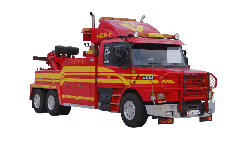
Roadside Assistance for Businesses — How to Protect Your Fleet
Roadside Assistance for Businesses — How to Protect Your Fleet
Managing a business fleet isn't just about buying and servicing vehicles. Every unexpected breakdown means downtime, delivery delays, and lost revenue. We work with courier companies, construction firms, and logistics operators across Poland — and the ones with a dedicated roadside assistance contract lose far less money when things go wrong.
Here's how to set up the right solution for your fleet — from partnership agreements to per-incident calls.
Why Do Businesses Need Dedicated Roadside Assistance?
A private driver needs a tow truck once every few years. A company with 20+ vehicles statistically needs roadside assistance 4–8 times per year. That frequency changes the math completely.
- Time = money — every hour of downtime is lost revenue
- Legal liability — the company is responsible for driver and cargo safety
- Reputation — delayed deliveries affect client relationships
- Insurance costs — breakdown history affects premiums
Fleet Downtime Costs
| Fleet Type | Estimated Cost/Hour |
|---|---|
| Courier | 50–125 EUR |
| Delivery (HGV) | 125–500 EUR |
| Construction | 75–375 EUR |
| Sales | 25–75 EUR |
| Special transport | 250–1250 EUR |
Contract vs Per-Incident — Comparison
Per-Incident Calls
- Pros: No fixed costs, pay only when needed
- Cons: Higher rates (50–200 EUR), no guaranteed response time, scrambling to find a company at 2 AM
Partnership Contract
- Pros: Lower rates (20–40% discount), guaranteed response time (SLA), dedicated phone line, priority service, monthly billing
- Cons: Monthly fee (but lower cost per intervention)
When is a contract worth it?
- 5+ vehicles — almost always
- 10+ vehicles — no question
- Vehicles in continuous use (delivery, courier) — yes
- Vehicles older than 5 years — yes (higher breakdown risk)
Key Contract Elements
1. SLA — Response Time
The most critical parameter:
- Critical: Up to 30 min (highways)
- High: Up to 60 min (national roads, cities)
- Standard: Up to 90 min (local roads)
2. Geographic Coverage
Local (50–100 km), regional, nationwide (most common for fleets), or international.
3. Vehicle Types
Make sure the contract covers all your fleet vehicles: passenger cars, vans up to 7.5t, HGVs up to 40t, special vehicles.
4. Service Scope
Minimum: flatbed towing, on-site assistance, transport to authorized service, incident reporting.
5. Billing
Subscription + per-incident rate, flat rate including X interventions, or discounted per-incident.
What to Look for in a Partner
- Fleet experience — not every towing company handles fleets well
- Online reporting — access to intervention history
- 24/7/365 availability — including weekends and holidays
- Multilingual support — important for cross-border operations
- Own fleet vs subcontractors — own fleet means faster response
Benefits of a Permanent Partnership
- Lower costs — 20–40% discounts
- Faster response — priority for contract clients
- Budget predictability — fixed monthly costs
- Reporting — full intervention history, breakdown cause analysis
- Single contact point — 24/7 without searching
The Bottom Line
Professional fleet roadside assistance is an investment in business continuity. What matters most: guaranteed SLA, geographic coverage matching your routes, all vehicle types covered, transparent billing.
Looking for a fleet partner? Contact us — we'll prepare a custom offer. +48 571 426 225 — available 24/7.
Potřebujete silniční asistenci?
Zavolejte odtahovou službu: +48 571 426 225